- info@semraay.com



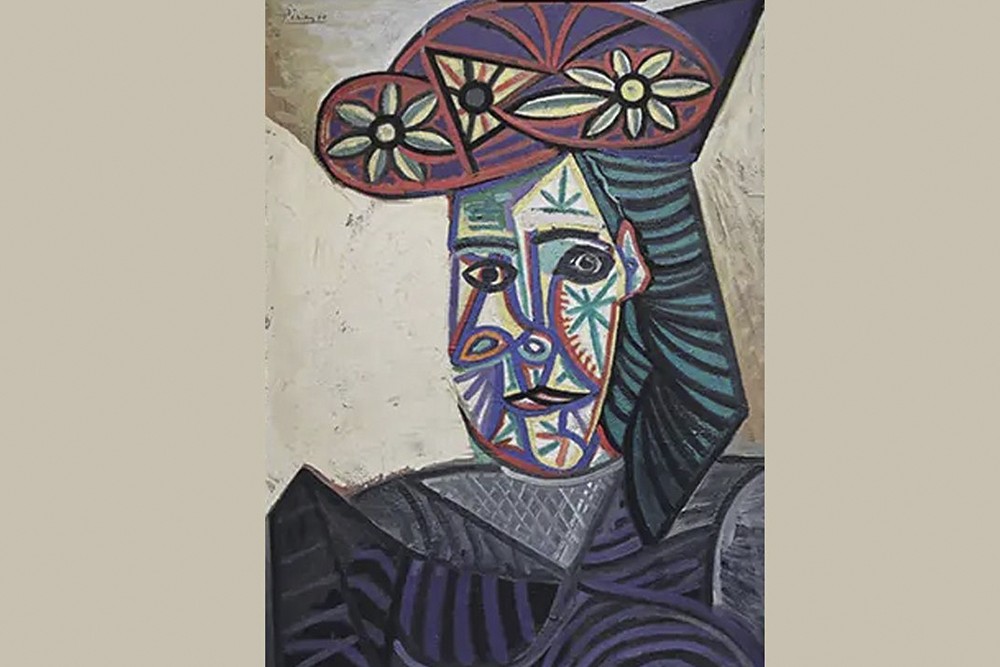
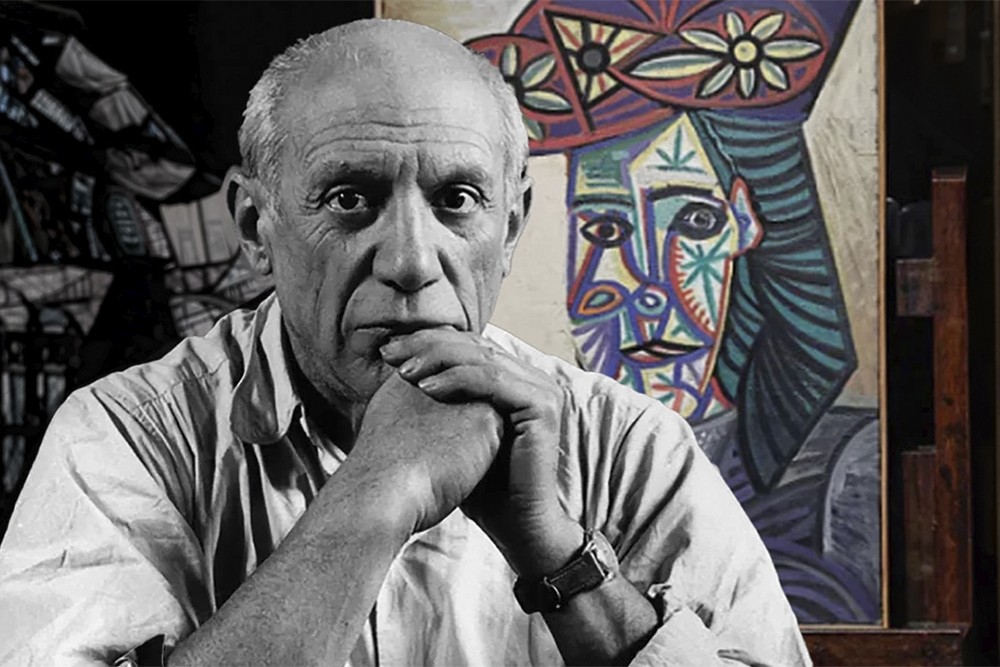
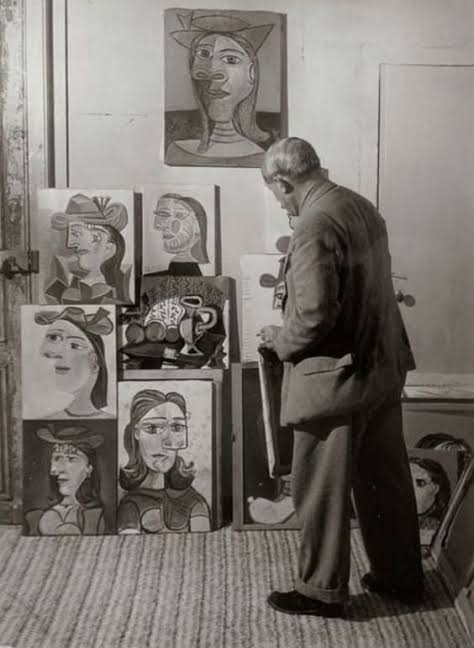
Imagine a work by Pablo Picasso that had been kept out of public view for nearly 80 years within a private family collection. “Woman with a Flowered Hat, Dora Maar,” an oil on canvas painting dated 1943, remained hidden from the public eye until it appeared at auction on October 24, 2025, organized by Lucien Paris at Hôtel Drouot. Until the auction, the work had only been known through a photograph taken in Picasso’s studio by photographer Brassaï (1899–1984) and a black-and-white reproduction published in the Picasso catalogue prepared by art historian and critic Christian Zervos (1889–1970). The painting was sold at the 2025 auction for 37.2 million dollars. This figure was recorded as the highest auction price in France in 2025 and became the second most expensive work by the artist ever sold in France.
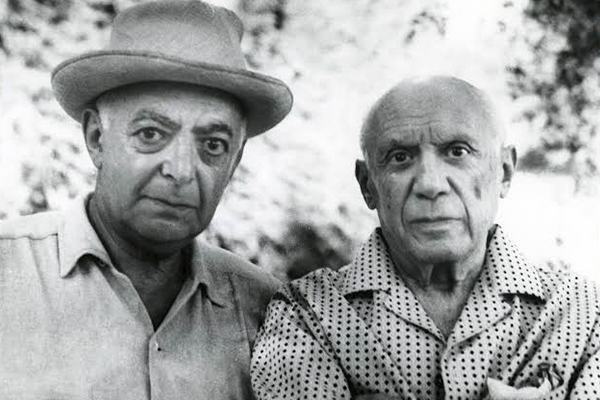
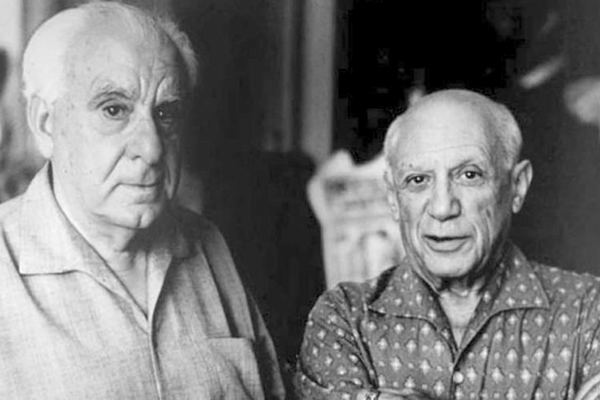
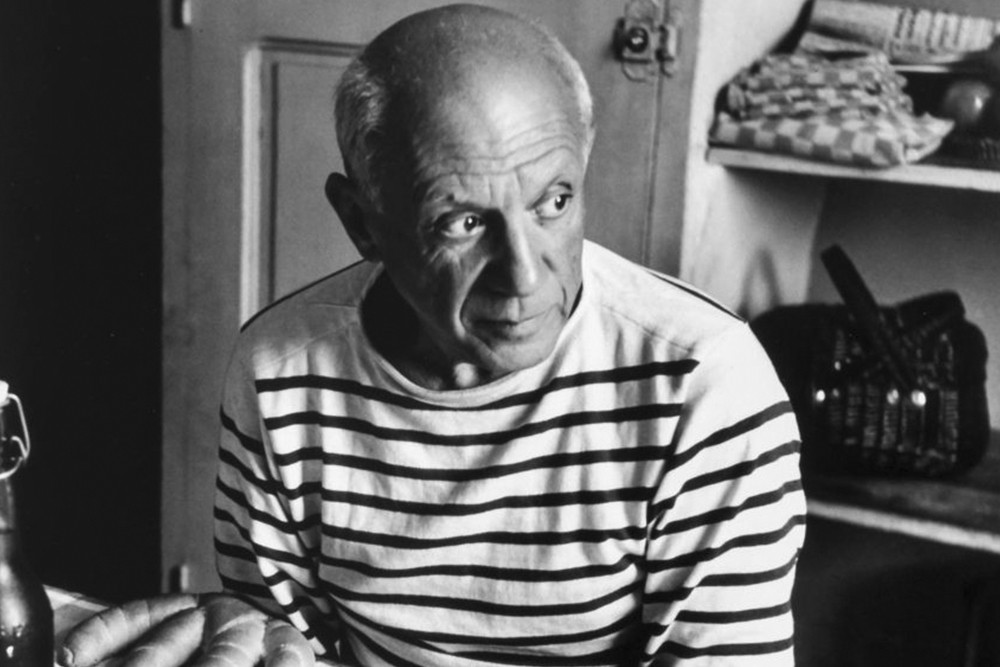
Now let us turn to the creator of the work. Pablo Picasso (1881–1973), the renowned Spanish painter, sculptor, stage designer, poet, and playwright, is known for his creativity and the multi-layered structure of his imaginative world. Picasso is considered one of the most important artists of the 20th century. The artist we know simply as Picasso actually had the full name “Pablo Diego José Francisco de Paula Juan Nepomuceno María de los Remedios Cipriano de la Santísima Trinidad Ruiz y Picasso.” Picasso was the genius who gifted Cubism to art history. Beyond his professional mastery, he was also known as a passionate man of love. Not only his artistic life but also his private life attracted great attention during his time. It is widely known from writings and films about him that he often had romantic relationships with the models who appeared in his paintings. In this context, today we will talk about a portrait of the female figure known as Dora Maar (Henriette Théodora Markovitch, 1907–1997), one of the most important women who left a mark on both his life and his art.
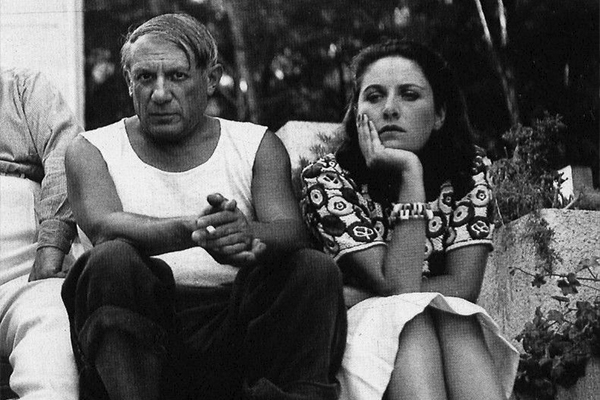
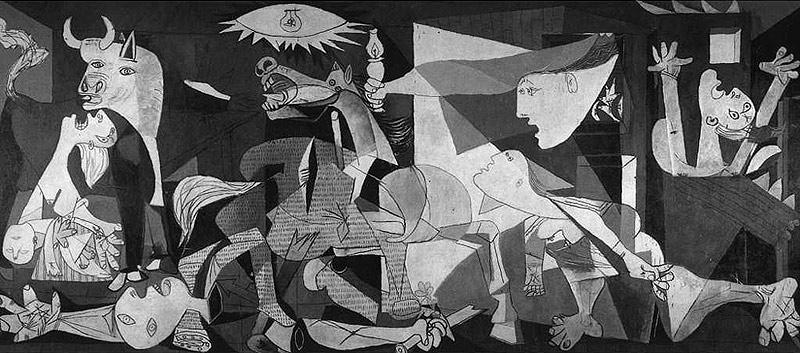
Before moving on to the portrait, it is necessary to get to know Dora Maar a little better. Henriette Théodora Markovitch (1907–1997), known as Dora Maar, became one of the muses reflected on Picasso’s canvases. In fact, Dora Maar herself was an important surrealist artist. She studied at André Lhote’s studio in Paris and attended the École de Photographie de la Ville de Paris, the Union Centrale des Arts Décoratifs, and the Académie Julian. She worked in photography, painting, and poetry. Dora Maar is also known for documenting the creation process of Picasso’s famous painting Guernica (1937) through photographs. After the end of her relationship with Picasso, she experienced a severe psychological breakdown and underwent clinical treatment for two years under the supervision of psychiatrist Jacques Lacan. During this period, she turned more intensely toward painting, producing works with sensory, personal depictions and landscapes.
Today we will focus on the painting titled “Woman with a Flowered Hat (Dora Maar),” an oil on canvas work dated 1943. The piece is one of many portraits Picasso painted during the period when he was in a relationship with Dora Maar.
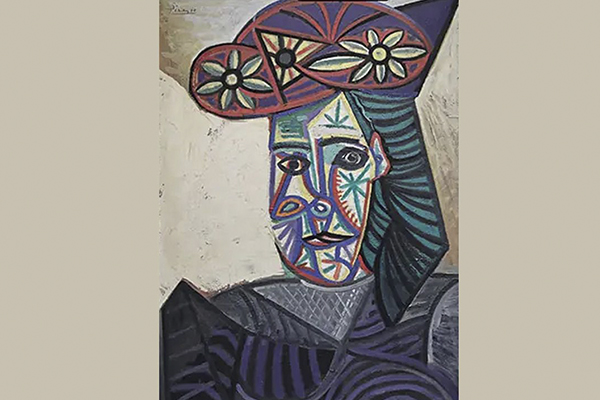
Pablo Picasso, Buste de femme au chapeau à fleurs (Dora Maar), 1943, Private Collection
Now let us consider the visual language of the painting. The work is a portrait executed in the Cubist style, using oil on canvas. The sections of the portrait are shaped by strong contours. As in the rest of the composition, the background also reflects Cubist divisions. Although the background is painted in light yellow and honey-like tones, darker colors and tones dominate the overall composition. Therefore, the painting conveys a rather melancholic atmosphere. There may be two reasons for this: Picasso might have sensed that his relationship with Dora was approaching its end and therefore turned to darker, more somber tones. At the same time, it is possible that Dora also felt these emotions, and that the model’s mood was reflected in the painting. The second reason could be the turbulent political environment of the time, as the painting was created in Paris under Nazi occupation. When compared with Picasso’s earlier portraits of Dora Maar, this portrait appears more sorrowful; one might even say she seems to be crying. The composition completely fills the canvas. Dora’s figure, from her head to her chest, seems almost compressed within the frame. It is as if Picasso reflected the sense of confinement that characterized the difficult period of their relationship, expressing Dora’s inner sadness.
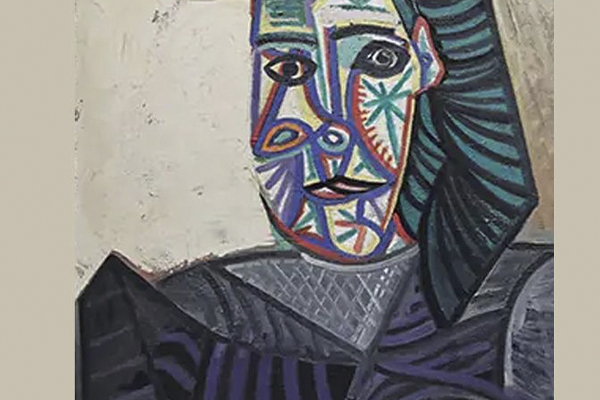
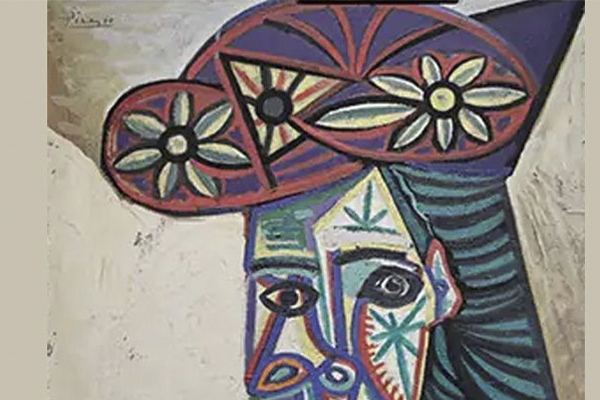
When focusing on the portrait itself, the first striking feature is the eyes, painted with dark black contours. Although rendered in a rough Cubist style, the expression of sadness and fear in the eyes can still be felt. Following this, the flower-like form dominating the face and the colorful linear forms intertwined with one another draw attention. In this context, it is worth noting that Picasso studied African masks during a certain period, and the influence of these studies can be observed in his works. The face is depicted narrower and longer than it naturally would be; the nose is exaggerated, and the ear is positioned closer to the face rather than where it would normally appear. A strong deformation is applied in the portrait. The structure of the face is altered—deconstructed—by manipulating its proportions and placement. These same methods are also visible in the depiction of the hair and the hat. Deformation, in fact, is one of Picasso’s characteristic artistic features.
When examining Dora’s clothing, we see an area dominated by black and grey tones, painted with more linear brushstrokes. The attire appears rather somber and extremely simple. The hat on the figure’s head is roughly depicted and seems almost merged with the hair. Although Picasso portrayed Dora surrounded by flowers, he actually conveys the sadness of the woman he loved. The painting seems to carry the traces of a love that is approaching its end. On the canvas we see Dora as the weary fighter of a great love and struggle.
Copyright © 2021 Semra Ay Çırpan. All rights reserved.
Photography & Design: Roll Yapım